Source Pastoral Wooden Wall Shelf for Home Office Storage
Explore 30 options for the pastoral wooden wall shelf designed for home, office, and library use. Buyers can compare materials like solid wood and iron, customization levels, and certifications such as ISO9001 to find the right fit for their needs.
Key considerations
Products List


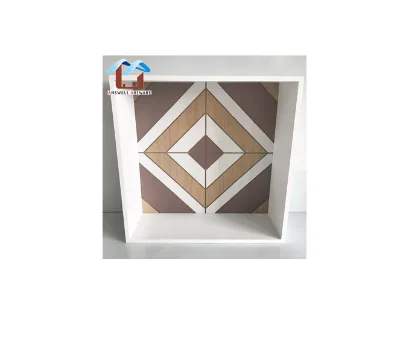





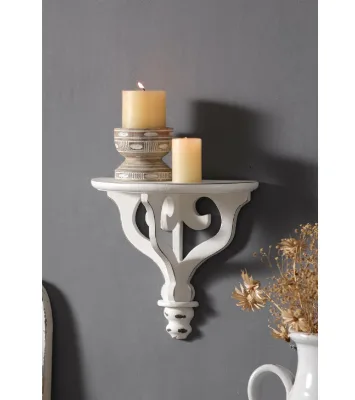


Comprehensive Sourcing Guide
Strategic Sourcing Guide for Pastoral Wooden Wall Shelves
Understanding the Product Category and Design Language
The core keyword "pastoral wooden wall shelf" identifies a specific niche within the broader home storage and decorative hardware market. In the context of B2B procurement, this category is defined by a distinct aesthetic that blends rustic charm with functional utility. The observed market data indicates that "Pastoral" is a recognized style attribute for these units, often characterized by natural wood finishes and designs that evoke a countryside or farmhouse atmosphere. Unlike modern minimalist shelves, pastoral units frequently feature visible grain, warm tones such as walnut or rustic colors, and designs that prioritize a handcrafted appearance over industrial precision.
When sourcing these items, buyers must recognize that the "wooden-made" attribute is a primary differentiator. The product specifications confirm that these shelves are constructed from solid wood or combinations of solid wood and iron. This material composition is critical for the structural integrity and the visual weight of the shelf. The "Pastoral" style often implies a specific treatment of the wood, such as a rustic color finish, which aligns with the observed "Rustic Color Wall Wooden Shelves" description in the market. Furthermore, the functional scope of these shelves is broad, with applications ranging from home and office use to display in libraries, study rooms, and even commercial spaces like supermarkets. The "Multi-purpose" function noted in the data suggests that these units are not limited to a single use case, allowing buyers to target diverse retail segments.
Technical Specifications and Material Composition
A rigorous evaluation of technical specifications is essential when procuring pastoral wooden wall shelves. The material composition is the most significant technical variable. The available data highlights two primary material configurations: "Solid Wood" and a composite of "Solid Wood / Iron." The presence of iron components often serves as a structural reinforcement, particularly for wall-mounted units that must support significant weight without sagging. Buyers should verify the specific ratio of wood to metal in any quoted product, as this directly impacts the durability and the "rustic" aesthetic.
Dimensions and layer configurations are equally critical. The market data reveals a wide variance in physical specifications. Some units are described with a "Regular" size, while others offer "Customized Size" options, with specific examples like 33333cm appearing in the dataset. The number of layers is another key specification, with observed configurations ranging from "1 Layer" to "Three" layers, and a general attribute indicating "1-5" grids. This variability means that a single order may require a mix of SKUs to meet specific display needs. The "Folded" attribute is noted as "Unfolded," indicating that these are rigid, fixed structures rather than collapsible units, which simplifies logistics but requires careful planning for container loading.
The product models identified in the market, such as TC212, JH0048, JH0053, JH0050, and JH0045, suggest that manufacturers often have distinct series for different pastoral designs. The "Wooden Wall Shelf" and "Wood Commodity Shelf Bookshelf" designations further clarify that the product can serve as both a decorative wall element and a functional storage unit. Buyers must ensure that the specific model selected matches the intended load-bearing requirements and the spatial dimensions of the target installation area.
Compliance, Certification, and Quality Standards
In the global B2B market, compliance is a non-negotiable aspect of procurement. The data indicates that suppliers for pastoral wooden wall shelves often hold certifications such as CIQ (China Inspection and Quarantine), ISO9001, and a combined ISO9000-ISO14001-CCC standard. The presence of ISO9001 suggests that the manufacturing process adheres to international quality management standards, which is a strong indicator of consistent production control. The ISO14001 certification points to environmental management systems, which is increasingly important for buyers concerned with the sustainability of wood sourcing and manufacturing emissions.
The CCC (China Compulsory Certification) mark is particularly relevant for products intended for the Chinese domestic market or those exported to regions that recognize Chinese safety standards. However, buyers targeting Western markets must verify if these certifications are sufficient or if additional regional compliance (such as FSC for wood sourcing or specific fire safety ratings) is required. The "CIQ" certification implies that the products have undergone inspection and quarantine procedures, which is a baseline requirement for export from China.
When evaluating a supplier, buyers should request valid copies of these certificates and verify their scope. The "Customized Standard" attribute in the data suggests that while there are baseline standards, many products are made to order. This customization capability means that the standard compliance of a generic model may not automatically apply to a bespoke design. Therefore, the buyer must explicitly state that the custom product must meet the same certification requirements as the standard line. The "New Product" and "Featured Product" attributes indicate that the market is dynamic, and buyers should ensure that the latest versions of the shelves still maintain these compliance levels.
Cost Drivers and Pricing Dynamics
The pricing landscape for pastoral wooden wall shelves is characterized by significant volatility, with observed ranges spanning from $2.80 to $689 USD. This wide disparity is not indicative of a single product type but rather reflects the complexity of the order. The primary cost drivers include the material grade, the extent of customization, and the scale of the order. A unit priced at the lower end of the spectrum likely utilizes engineered wood or thinner solid wood components with minimal finishing, whereas the higher-end prices correspond to premium solid wood, intricate pastoral detailing, and custom dimensions.
The Minimum Order Quantity (MOQ) is another critical factor influencing the unit cost. The observed MOQ range is 1 to 2000 units. For buyers seeking small batches or samples, an MOQ of 1 allows for low-risk testing, but the per-unit cost will be significantly higher. Conversely, an MOQ of 2000 suggests a focus on bulk industrial procurement, where economies of scale can drive the price down toward the lower end of the range. The "Customized Size" and "Customized Logo" attributes are additional cost multipliers. Every time a buyer requests a deviation from the standard 33333cm or standard walnut color, the supplier incurs setup costs for tooling and reconfiguration, which are passed on to the buyer.
Packaging also plays a role in the final landed cost. The data specifies "Carton," "1PCS/1CTN," and "Outer Carton" as common packing methods. For fragile wooden items, robust outer cartons are essential to prevent damage during transit, but they increase the volumetric weight of the shipment. Buyers must calculate the total cost of ownership, including freight, which is heavily influenced by the packing density and the fragility of the wooden components.
Supplier Evaluation and Geographic Considerations
The geographic origin of the product is a vital factor in supplier evaluation. The data points to two primary manufacturing hubs: Shenzhen, China, and Shandong, China. Shenzhen is known for its advanced manufacturing capabilities and proximity to major ports, often associated with higher-tech or more complex designs. Shandong, a province with a strong historical base in woodworking and agriculture, may offer more traditional pastoral designs at competitive rates.
When evaluating suppliers, buyers should look beyond the location and focus on the "Customization" capabilities. The data confirms that customization is "Available" and that "Customized Designs" and "Customized Logo" services are offered. A supplier's ability to handle "Disassembly" features is also noteworthy, as it can reduce shipping volume and costs. The "Style" attribute, ranging from "Modern" to "Pastoral" and "Bohemian," indicates that some suppliers offer a versatile portfolio. Buyers should assess whether a supplier specializes in the pastoral aesthetic or if it is a minor part of their catalog, as specialization often correlates with higher quality control in that specific niche.
The "Product Compatibility" list, which includes "Dining Room Living Room Study Library Supermarket," suggests that these shelves are versatile. A supplier with experience supplying supermarkets may have different quality standards compared to one focusing on residential home decor. Buyers should request case studies or references from clients in their specific target sector to ensure the supplier understands the unique demands of that market.
Quality Control and Long-Term Procurement Strategy
Quality control for wooden products requires a multi-faceted approach. The "Condition" is listed as "New," but this is a baseline. Buyers must verify the finish quality, specifically looking for defects in the "Walnut" or "Rustic Color" finishes. The "Number of Grid" and "Layer" consistency must be checked to ensure that the shelves are level and that the spacing is uniform. The "Iron" components, if present, should be inspected for rust resistance and secure welding, as these are common failure points in wall-mounted units.
For long-term procurement, the "Customized" nature of the product requires a stable supply chain agreement. Since the "Standard" is listed as "Customized," the buyer and supplier must agree on a master specification that remains constant across multiple production runs. This prevents drift in quality or design over time. The "Usage" attributes, including "gift," "decoration," "storage," and "display," imply that the product must withstand handling and environmental changes. Buyers should consider the humidity resistance of the wood, especially for pastoral shelves that may be used in bathrooms or kitchens.
Finally, the "Selling Units" being "Single item" suggests that the market supports both bulk and retail sales. Buyers should ensure that the packaging is retail-ready if the end-user is a consumer, or industrial-ready if the end-user is a distributor. The "Outer Carton" specification is a good starting point, but for high-value items, double-walled cartons or corner protectors may be necessary to prevent damage during the "New Product" launch phase. By adhering to these rigorous standards and leveraging the available data on materials, certifications, and customization, buyers can effectively source high-quality pastoral wooden wall shelves that meet both aesthetic and functional requirements.
FAQs
What materials are used for pastoral wooden wall shelves?
These shelves are primarily constructed from solid wood or a combination of solid wood and iron. The material composition ensures structural integrity while maintaining the rustic aesthetic required for pastoral designs in homes and offices.
Can buyers request customized sizes and logos for these shelves?
Yes, customization is available for both product dimensions and logos. Buyers can specify custom sizes like 33*33*3cm or request unique designs, though this may affect the minimum order quantity and unit pricing.
Which certifications do suppliers typically hold for these products?
Suppliers often hold CIQ, ISO9001, and combined ISO9000-ISO14001-CCC certifications. These standards indicate compliance with quality management and environmental systems, ensuring the products meet international safety and inspection requirements for export.
How many layers are available in the observed product range?
The product range includes configurations with one layer, three layers, and options for one to five grids. Buyers should verify the specific layer count against their storage needs, as the number of grids varies by model.
What is the typical price range for these wooden wall shelves?
The observed price range spans from 2.8 to 689 USD depending on material and customization. Lower prices usually reflect simpler designs or smaller orders, while higher prices correspond to premium solid wood and custom specifications.
Where are these pastoral wooden wall shelves manufactured?
Manufacturing locations include Shenzhen and Shandong in China. These regions offer distinct advantages, with Shenzhen known for advanced capabilities and Shandong for traditional woodworking, influencing lead times and shipping logistics.
Can these shelves be disassembled for easier shipping?
Yes, disassembly is a feature available for certain models to reduce shipping volume. This capability helps lower freight costs, though buyers must ensure the packaging, such as outer cartons, protects the components during transit.